The balsamic vinegar
Traditional Balsamic Vinegar of Modena is “A product of ancient history and undoubted nobility.” The historical research on Traditional Balsamic Vinegar of Modena takes us to the early eighteenth century when we find for the first time the term “balsamic” together with the term “vinegar”, as shown in the register of the grape harvests and wine sales on behalf of the Duke’s Secret Cellars (State Archives, Modena). However, we can assume that the origin of the processing of balsamic vinegar in Modena is even older because its presence is reported already in 1508 at the court of the Duke of Modena, Alfonso I of Este, the husband of Lucrezia Borgia.
We then find documents and manuscripts of the sixteenth century where they go into detail about the production of balsamic vinegar of Modena in all its phases, referring to the barrels kept in a tower of the ducal palace. So in this historic evidence we have the basic elements about the production of Traditional Balsamic Vinegar of Modena, the result of the processing of the cooked must from grape varieties cultivated in the area of Modena and its province, and the structure of the premises where the barrels are carefully guarded and where the filling up take place, usually the attics of buildings.
In the late nineteenth century, thanks to the spread of the printing, Balsamic Vinegar of Modena is more and more quoted as a product of high quality and we begin to find notes about the quantity that is produced.
It is therefore very long time that in the province of Modena this particular type of vinegar is produced with its characteristics preserved virtually unchanged until today. This originality of taste, this respect for traditional procedures and the narrowness of the production area are today strong points for producers who lovingly care for a classic product of their traditions …
Let’s see now the processing phases:
- Step 1: The harvest
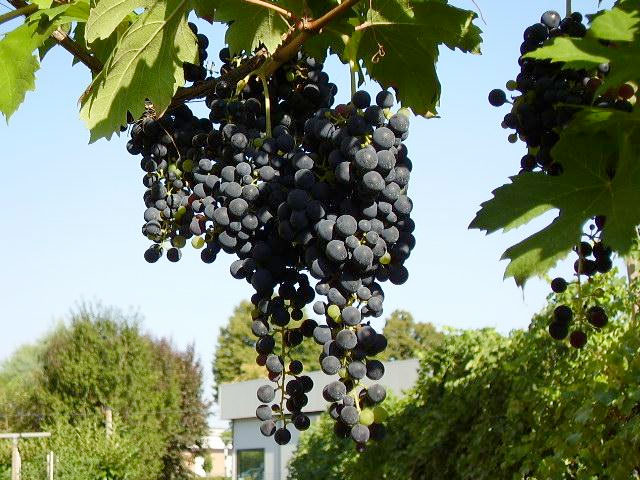
The grape harvest is still done by hand, according to tradition, by selecting the best bunches of grapes Trebbiano and Lambrusco di Modena.
it takes place in the months of September and October, when the ratio between sugar and acidity is higher and it is a very important phase in the production of Balsamic Vinegar of Modena since the quality and integrity of the bunch is essential before pressing.
The other important step is the pruning of the vines which occurs in winter time and on which depends the health of the plant and therefore of future crops. - Step 2: The pressing
The pressing of the grapes is done with the system called “soft” to avoid the excess of polyphenols contained in the skins, in the seeds and in the stalks that slow down the process of acetification and could give bitterness to the product. The must is then filtered to remove solid residuals and impurities. - Step 3: Cooking
The must is cooked within 24 hours from the pressing to prevent fermentation, in open steel cauldrons and on direct fire for 36 – 48 hours, until it reaches a concentration of 50% and over. Then the must is boiled for half an hour in order to sterilize it, and then cooked at a medium temperature of 85 ° C. The cooked must is then cooled and allowed to settle until January. - Step 4: The ripening
The must is left to ripen in batteries, composed of at least nine wooden barrels with a capacity decreasing from 180 to 10 liters, each made of different wood (oak, cherry, ash, chestnut, mulberry, juniper, acacia …) and filled only to 75% of its capacity. The batteries are located in the attic because the temperature range is wider (hot summer and cold winter). The barrels are open to allow the concentration of the liquid, by natural evaporation. The secrets of aging are often handed down from generation to generation and therefore do not follow a fixed rule, every manufacturer proceeds according to its experience gained over the years.
The next steps that will be described take place during the aging period, which can last forever! - Step 5: The pouring off and the filling up
These two delicate operations closely linked to one another take place in winter, when the balsamic vinegar is in a deep sleep because of the cold, and then the fermentation activity stops. The pouring off is the transfer of liquid from a largest barrel to a smaller one, while the filling up is the leveling of the barrel just decanted. The first operation includes therefore always the second, except for the first barrel, the larger one, where they execute only the reinforcement with cooked must Specific tools are used for each operation and they proceed with a continuous and constant control of the state of health of the barrels and their content. - Step 6: The tasting
Every year olfactory, visual and gustatory tests are performed on each barrel, checking the transparency, smell and taste of the liquid. A clear and thoroughly clean glass container is used and the liquid withdrawn from the barrel is poured through an appropriate glass testing tube. For the visual analysis, it is preferable to use the light of a candle to evaluate the color the density and clarity against the light.The parameters include the olfactory intensity, the persistence of aromas and the acidity, while during the tasting the intensity, the flavor, the harmony between sweet and sour and acidity will be analyzed and they prefer to use a porcelain spoon, more suitable not to alter the flavor. The tasting is accomplished far from the meals and several tasters compare the results to ensure optimal objective quality.
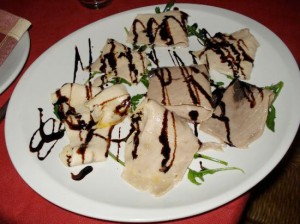
And so we come to the use of the Traditional Balsamic Vinegar which is certainly as a dressing for salads, but it can be also used also on meat and fish, boiled meat , Parmigiano-Reggiano cheese and fruit (especially on strawberries, peaches and tropical fruits).
For the use of “Balsamic” there are rules dictated by a century of experience according to which the “Balsamic” is almost always the last to appear in the sequence of ingredients provided for preparation.
The calculation of the amount is about one teaspoon per person.
On cooked food Balsamic Vinegar Is to be added just a moment before removing the food from the fire so that there is enough time to flavor the dish but not enough time for the vinegar to lose its unique aroma.
In the case of hot food is good practice to add the balsamic vinegar just before serving.